
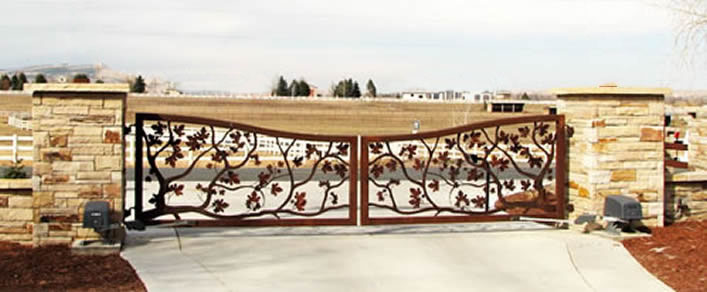
Who Closes the Gates?
Oct. 30th, 2017G-d Never Closes the Gates; We Do
We approach Yom Kippur with the image of gates closing. We are bidden to repent before they do, on the expectation that we could get caught on the wrong side of the wall. But whose gates are they anyway, and who says they are closing? They are ours, and we do.
Generations of our people have dwelt on the metaphor of the Book of Life as a cornerstone element of Yom Kippur. Our prayers are aimed at seeking merit to be inscribed in the Book for the coming year. The last call of the Shofar signals the closing of the Book. There is great emotion at that moment. We feel more vividly than usual the mysterious unknown future. The liturgical lead -in dramatizes not only the risk of death but also the ways one might die. The crescendo is operatically intense. If only we have repented, we have a chance. Or so we believe.
Repentance is a profound act. It is not just an apology. It is a conscious acceptance of fault and a commitment to repair. To repent is to open up, to own up, to stand up. It is the opposite of compromise, of avoidance, of “normalization.” Genuine repentance is difficult, for a reason. If it were easy, then it would be meaningless. No one else can repent for you; no formula or ritual will accomplish it. You are uniquely in control of yourself on this one, my friend.
So why does our Yom Kippur metaphor imply that the decision to close the gates into the hands of the Almighty? It seems very transactional. I repent; You let me in. This is a mistaken inference. Just as we are admonished that our Yom Kippur Fast not be for show, but rather to provoke awareness, our commitment to repentance needs to be real and not for a reward.
The important gates are ours to open, not those of the Almighty. They are the gates to our conscience and to our hearts. We are our own gatekeepers, not G-d. If we open our gates, we will find that the Almighty’s are never closed.
Gemar chatima tova.