
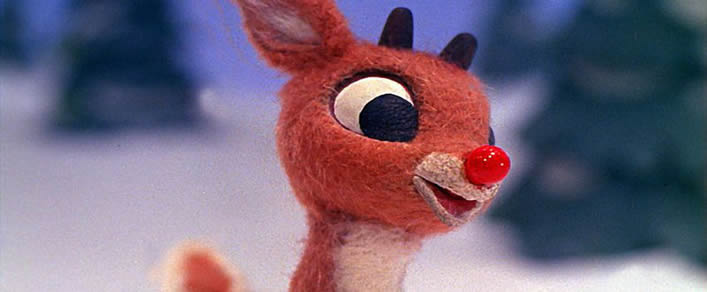
The Strange Case of Rudolph the Red Nosed Reindeer
Nov. 30th, 2017Things are not always as they seem; maybe they never are; maybe they are more than they seem. Take the strange case of Rudolph the Red Nosed Reindeer. He is such an adorable character and his story is so wholesome. Really? Rudolph was created as an advertising image in the 1930s for Montgomery Ward’s Christmas selling season. When Rudy clicked with the public, Ward’s president asked his song writer brother in law to bring the little creature to life through music, thereby taking Ward’s two dimensional marketing much more deeply into the consumers’ psyche. The result was a sensation that far eclipsed any connection to merchandising. The Depression burdened country embraced the tale of innocence, achievement and love, both for Christmas and for the straightened times.
We never think about the song anymore, because we all know it by heart. Rudolph is an icon, part of the nation’s cultural DNA. Part of the beauty is that we imagine singing the lyrics in our own voice, We don’t relate the music to a singer, like Bing Crosby and “White Christmas”, even for those who have no idea who that man singing the song is. We are the voice of Rudolph, and we relate to him.
I do not think that Richard May the composer had any motive other than to help Ward sell its wares. That makes what he wrote even more fascinating, because of the subconscious messaging in the story. Perhaps even more astounding is that the listening public has never in almost ninety years given the story a second thought. They just love it.
The most important word in the song is “then” – “then one foggy Christmas Eve….” and “…then all the reindeer loved him.” “Then” is a conditional outcome, which is dependent on an “if.” What if the weather had been clear? Would Santa have ignored Rudolph? And “then” would the other reindeer have continued to laugh at Rudolph and call him names, and otherwise mistreat him? Did Santa only acknowledge Rudolph because he needed him? Was Rudolph disabled, given his red nose?
The tale is susceptible of a subtextual analysis. The story embodies themes of valuing people for their differences (red noses); the importance of leadership (letting Rudolph guide the sleigh that foggy night); and tolerance (all the reindeers loving Rudolph by the end of the song). In the alternative, there are less heuristic messages such as bullying of the odd reindeer out, followed by exploitation of him only when needed, by an archly pragmatic boss.
What if the song had placed Rudolph in the reindeer herd as an equal? “Rudolph the red nosed reindeer was just one of the guys.” Maybe that would have been hard to score musically and maybe just too ordinary. We generally prefer triumph to steadiness. Thus, we are left in a quandary? Should we care what can be made of the song; or should we just enjoy it? There is no right answer, and there is no good reason that this cute song should become a battle in our cultural wars. However, given that this a Christmas message, which has far transcended marketing (indeed, Montgomery Ward no long exists), maybe there is purpose in recognizing that it sometimes takes a challenge from without (like the weather) to bring the herd together.